Social media to level UP
View in App
Avoid These Products for Better Health
Ramese Sanders
Switch to Safer Alternatives
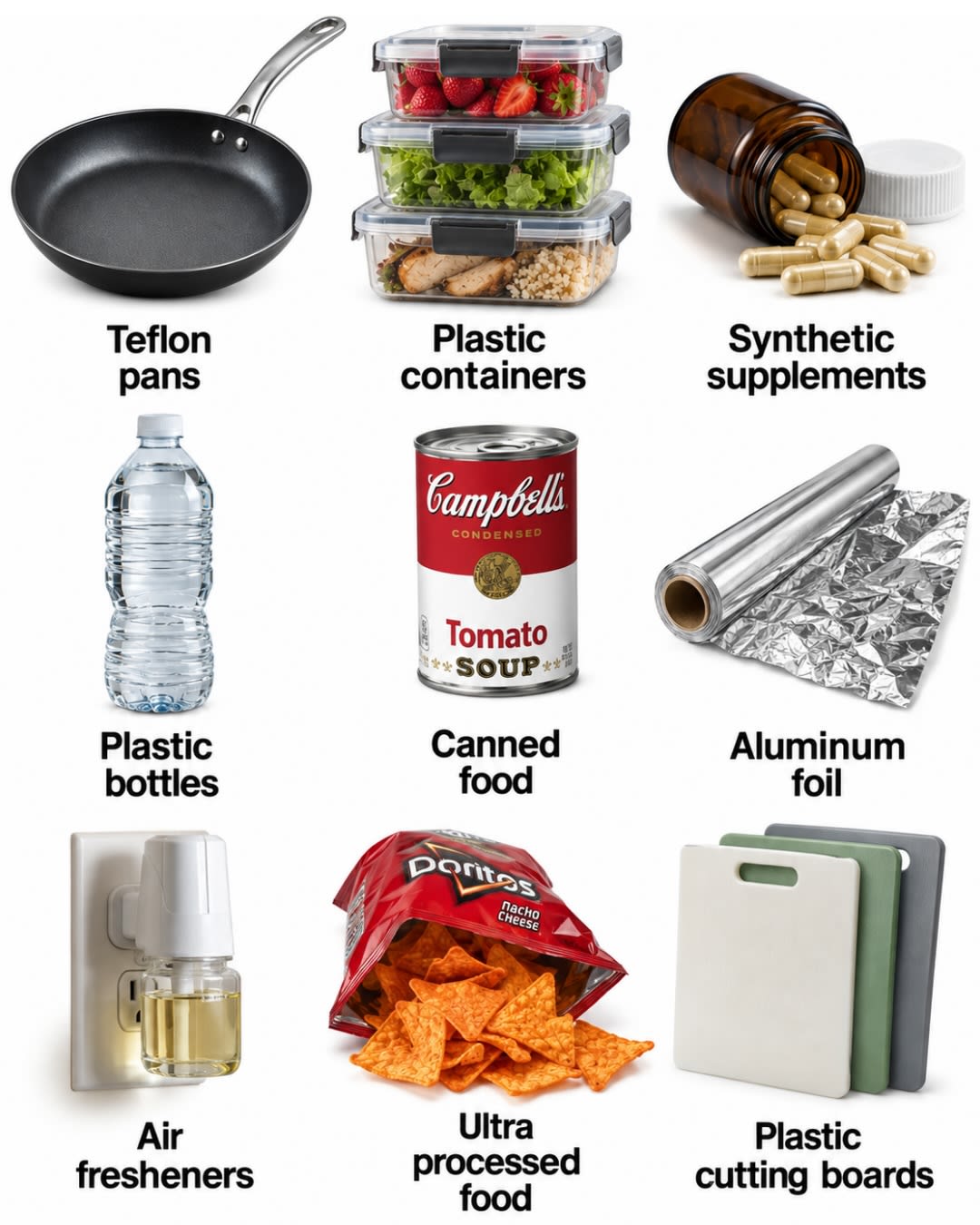
Here’s why I avoid these products and what I use instead 👇 Teflon pans: Non-stick cookware can contain forever chemicals, and overheating or damaging the coating can cause it to break down. SWAP → Stainless steel, cast iron, or ceramic cookware. Plastic containers: Plastic can transfer chemicals into food, especially when heated. BPA and certain phthalates can interfere with hormones. SWAP → Glass or stainless steel containers. Synthetic supplements: Many contain synthetically produced nutrients, fillers, artificial colors, sweeteners, or other additives. I prefer getting nutrients from food and nature. SWAP → Nutrient-dense whole foods or high-quality food-based supplements when needed. Plastic bottles: Bottled water can contain micro- and nanoplastics, and heat can increase the migration of certain chemicals from plastic. SWAP → Spring water or RO-filtered water stored in glass or stainless steel. Canned food: Many cans have interior linings that can contain BPA or other chemical coatings. SWAP → Fresh, frozen, or glass-packaged foods. Aluminum foil: Aluminum can transfer into food during cooking, especially with acidic or salty foods and higher temperatures. SWAP → Unbleached parchment paper. Air fresheners: Many fragranced air fresheners release VOCs and fragrance chemicals into indoor air. SWAP → Open windows, improve ventilation, simmer natural ingredients, or go fragrance-free. Ultra-processed food: Often contains refined ingredients, additives, flavorings, and other highly processed ingredients. SWAP → Whole, minimally processed foods with simple ingredients. Plastic cutting boards: Repeated chopping can wear down plastic and release tiny plastic particles from the surface. SWAP → Solid wood cutting boards.
more
Avoid These Products for Better Health | Upspace Post